Ice, Interrupted: In Defense of Arcade Hockey's Zamboni Bonus Round
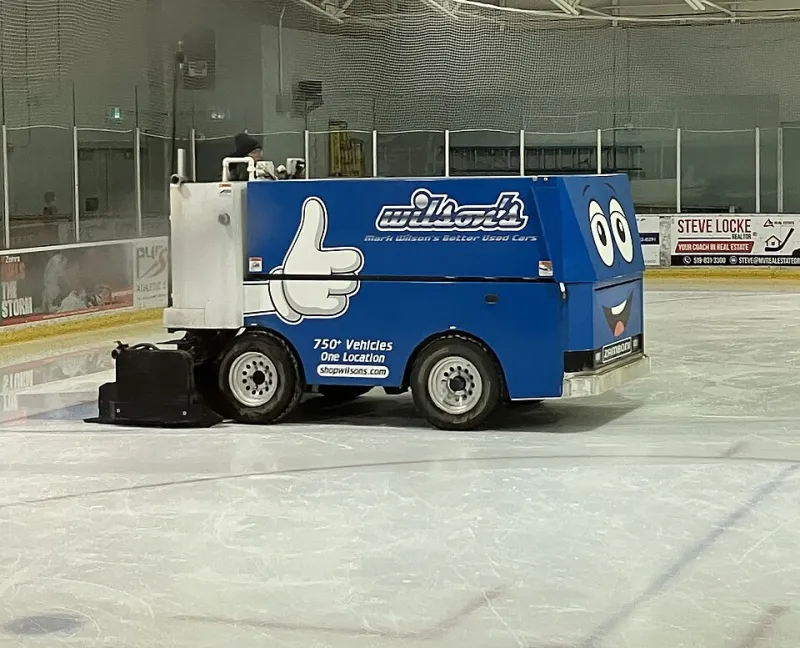
Photo: Gogerr, CC BY-SA 4.0, via Wikimedia Commons
Every arcade hockey game has a rhythm. Skate, pass, check, shoot, curse softly, repeat. The best ones know when to break that rhythm. They know when to give the player a breath, a laugh, or a tiny weird reward. And nothing breaks the rhythm quite like the Zamboni.
I am not talking about a realistic simulation of ice maintenance. I am talking about the arcade hockey Zamboni: the bonus round, the between-periods animation, the hidden Easter egg, the moment when the game stops pretending to be a sport and remembers it is also a toy. It is the most mundane thing in hockey, and arcade games turned it into a little piece of theater.
The Most Mundane Hero in the Arcade
Hockey is a game of speed and violence, but it is also a game of housekeeping. The ice gets chewed up. The puck starts bouncing. Somebody has to drive the big slow machine out there and make it nice again. In real life, the Zamboni is a practical necessity. In arcade hockey, it became something else: a pacing device with a hard hat.
Think about how strange that is. You have a game built around fast reflexes and loud checks. Then, between periods, the action stops. The crowd noise settles. A boxy vehicle trundles across the screen. And somehow it works. It gives the player a second to unclench. It gives the game a chance to reset. It gives the whole thing a sense of place. You are not just playing a hockey game. You are in a rink.
The Zamboni is the arcade equivalent of a loading screen that you actually want to watch. It is the calm between storms. It is also deeply funny. A machine whose entire job is to make things less interesting becomes the most interesting thing on screen for ten seconds.
A Pacing Device Wearing a Hard Hat
Retro hockey games understood pacing in a way that modern sports sims sometimes forget. You cannot crank the intensity to eleven for an entire match. You need valleys. You need little moments of quiet. The Zamboni interlude was a cheap and charming way to create those valleys without loading a new level or dropping in a cutscene.
Some games used it as a simple between-periods animation. Others turned it into a bonus stage or a mini-game, where the player controlled the resurfacer or tried to hit a target. The details varied, but the effect was the same: the game winked at you. It said, yes, this is a hockey game, but it is also an arcade game, and arcade games are allowed to be weird.
That weirdness is part of the appeal. A Zamboni bonus round is not realistic. It is not necessary. It is not the reason anyone put a quarter in the machine. But it is the kind of detail that makes a game feel handmade. Somebody on the development team thought, what if we let the player drive the ice resurfacer? And somebody else said, sure, why not. That is the energy of arcade hockey at its best.
The Bragging-Right Layer
Any arcade mini-game eventually becomes a bragging right. The Zamboni is no exception. If there is a way to score points by resurfacing ice, somebody has figured out the optimal route. Somebody has memorized the timing. Somebody has turned a maintenance vehicle into a competitive discipline.
That is beautiful. It is also deeply in keeping with arcade culture. We take the silly thing seriously. We turn the joke into a high score. We argue about whether the Zamboni bonus is skippable, whether it counts toward the final tally, and whether the guy who perfects it is a legitimate legend or just has too much time on his hands. The answer, of course, is both.
The Zamboni round also gives less skilled players a moment to shine. Not everyone can deke a goalie or land a one-timer. But almost anyone can drive a slow rectangle across a sheet of ice if the game gives them the controls. That is good design. It widens the door. It lets the person who usually loses the hockey match win the weird little intermission.
Why We Still Hit the Zamboni Button
In 2026, retro hockey is often about preservation. We keep old cabinets alive. We hunt down cartridges. We argue about CRT scan lines and joystick tension. But it is also about the little rituals that made these games feel like places. The Zamboni is one of those rituals. It is the smell of rink air and the sound of a crowd waiting. It is the moment when the game slows down enough for you to remember you are having fun.
Modern hockey games have better graphics, better physics, and better everything. But they rarely have a Zamboni bonus round. They are too busy being serious. That is their loss. The old arcade games knew that a sports game could be a simulation and a cartoon at the same time. They knew that a maintenance vehicle could be a mascot. They knew that a ten-second break could be the most memorable part of the night.
So here is to the Zamboni button, wherever it is hidden. Here is to the between-periods animation that gave us a second to breathe. Here is to the bonus round that made no sense and made the whole game better. Ice gets resurfaced. Legends get made. And somewhere in a garage, a CRT hums while a boxy little machine drives across the screen one more time.