Pass the Gravy, Guard the Slot: Our Thanksgiving Arcade Hockey Bracket
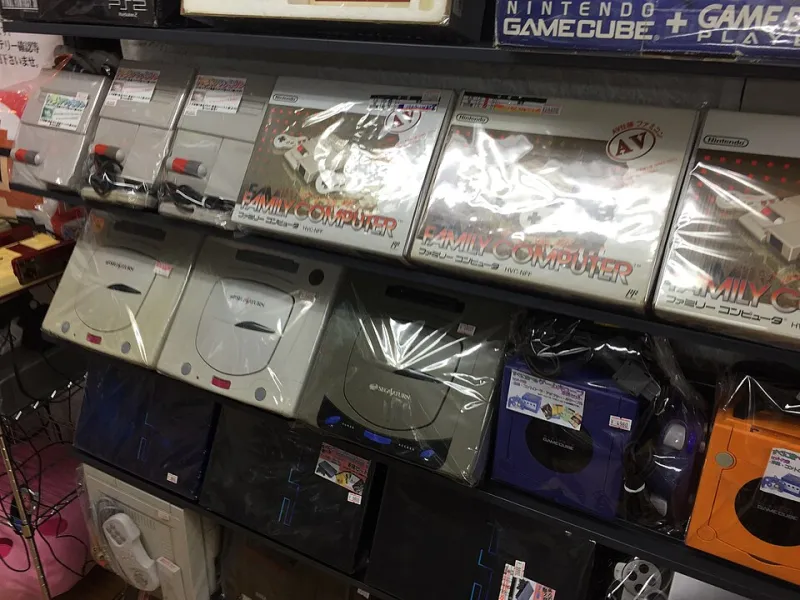
Photo: Ominae, CC BY-SA 4.0, via Wikimedia Commons
The turkey comes out around three. The Lions game goes on in the living room, and about half the family pretends to care about it. By four o'clock, the actual competition has moved to the basement, where a CRT is humming and somebody is already arguing about controller assignments.
We have run a Thanksgiving arcade hockey tournament every year since I was in middle school. It started as a way to keep four kids from murdering each other during the long wait for pie. It has since developed its own bracket, its own trophy (a spray-painted goalie mask from a thrift store), and its own set of grudges that get re-litigated annually.
I did not plan for this to become a tradition. But I have thought a lot about why it stuck, and I think it comes down to something the modern sports game industry has mostly forgotten.
Why Arcade Hockey Is the Perfect Holiday Equalizer
My uncle has never played a video game with a right analog stick in his life. He is, however, genuinely dangerous in a retro hockey game, because those games ask for exactly three things: skate, pass, shoot. There is no skill stick, no line chemistry, no fatigue meter to manage.
That simplicity is the entire point. A ten-year-old and a sixty-year-old can sit down with the same controller and be competitive within one period. Modern hockey sims are wonderful, but they are built for people who play them for forty hours a year. On Thanksgiving, you have relatives who play once a year, at best, and you have about twenty minutes of patience before someone wanders off to find the chip dip.
Simple controls also mean the losses are honest. Nobody gets beaten because they did not know which button was the poke check. You get beaten because you got outplayed, and that stings in a way that makes for great entertainment.
Our Bracket Setup, Borrowed and Refined
Eleven years of trial and error has produced a format that mostly works:
- Sixteen players, double elimination. Nobody wants to drive home after one game. The loser's bracket is where the drama is.
- Four-minute periods. Long enough to feel like a game, short enough to keep a line moving.
- Random seeding, drawn from a hat at the table. This is non-negotiable. Seeding by age or by skill is how you get hurt feelings before the mashed potatoes.
- Mercy rule at six goals. It ends blowouts early and keeps the tournament on schedule.
- One designated scorekeeper with a clipboard. Paper. Do not trust an app. Do not trust your cousin's memory.
We run two consoles to keep the bracket moving, which means somebody has to referee the second setup. That job rotates. Nobody likes it. Everybody does it.
House Rules That Keep the Peace
A few things we learned the hard way, offered free of charge:
No coaching from the couch. It sounds harmless. It is not. Half of our fights over the years started with an uncle yelling instructions from behind the sofa.
Controller banter is allowed. Controller throwing is not. Be loud. Do not be physical with the hardware. Those things are old and getting more expensive every year.
The pie break is mandatory. We stop the bracket cold, no matter whose run is going, and eat. The tournament has never once suffered for it, and everyone comes back sharper.
Let the little kids win something. Not by throwing games — they will know, and they will resent it. Give them their own consolation bracket with a real prize. We hand out a mini mask trophy. It works.
The Hardware Reality Check
If you are setting this up for the first time, a few practical notes. Use a CRT if you have one, because the timing on these games feels off on a modern panel. Test every controller the night before — this is the single most common cause of Thanksgiving morning panic in my house. And if you are on original hardware, clean the contacts. You do not want a game to crash in the third period of a semifinal.
Emulation is a perfectly fine fallback, and it is a lot easier to get four controllers working on a PC than on a forty-year-old console. Nobody at the table will audit your setup. They will audit your calls, though. See previous section.
What We Are Actually Playing For
The trophy is worthless. The bracket gets scribbled on and lost. What survives is the memory of the year my grandmother won a game by parking her defenseman in front of the net and refusing to move, or the year a nine-year-old eliminated his own father in the semifinal and then quietly asked if he could have an extra slice.
You cannot schedule that. But you can make a space for it. Four-minute periods. Double elimination. Random seeding. Turn the volume up.
Insert coin. Drop the puck. Then pass the gravy.