Two Pulse Channels and a Crowd: The Black Magic of Retro Hockey Audio

Photo: Ominae, CC BY-SA 4.0, via Wikimedia Commons
Ask anyone who dropped quarters into Konami's Blades of Steel in 1988 what they remember, and it will not be the sprite work. It will be the sound. The digitized bark of a fight breaking out at center ice. The whistle that cut clean through everything else in a noisy arcade. And the goal horn — a blunt, brassy blast that somehow sounded like a shopping mall and a packed NHL building at the same time, produced by hardware that could barely manage a drum beat.
We spend a lot of retrospective energy on pixels around here. Sprite counts, palette limits, parallax scrolling. But pull up most of these games and mute them, and they collapse into spreadsheets. The audio is what turned a grid of colored tiles into a place with weather.
The Chip Was the Constraint, and the Constraint Was the Art
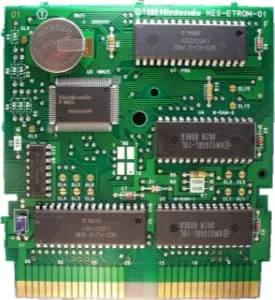
The NES sound hardware handed composers five voices: two pulse channels, a triangle for bass, a noise channel, and a sample channel for short digitized clips. That is the entire orchestra. No reverb, no multi-track mixing, no room to hide a mistake.
The Sega Genesis went a different direction with Yamaha FM synthesis — six channels of glassy, metallic tone plus a PSG for noise and effects. The Super Nintendo swung the other way entirely, with eight channels of sampled audio, which felt like cheating after years of square waves.
None of those setups could record a crowd. Not even close. So engineers invented one. A roar became filtered noise, swelled and ducked at exactly the moments a real building would react. Nintendo's Ice Hockey is essentially organized static rising and falling behind the action — and your brain files it under 'crowd.' That is not a technical achievement. It is a magic trick, and it worked on all of us.
Skate Hiss, Organ Stings, and Other Small Lies
The details are where the illusion lives. The thin hiss of blades on ice, usually patched out of the noise channel between faceoffs. The tinny organ that stuttered through a few bars during a stoppage, giving the whole thing a barn-and-bulbs feel that no modern licensed soundtrack has ever quite reproduced.
Then there were the voices. Blades of Steel's clipped speech was a genuine showoff move for a cartridge-based game — short, crunchy, instantly quotable. Later arcade boards with dedicated speech chips could do more, and Midway's 2-on-2 hockey title leaned hard on the same announcer DNA that made NBA Jam a household name. Hearing a machine say something to you in 1993 was enough. It did not need to be accurate. It needed to be loud.
The Goal Horn Is a Psychological Weapon
Here is the part nobody writes about: goal horns are conditioning, and arcade designers knew it. A horn fires, the screen flashes, the crowd noise spikes, and your hands are already moving before you have consciously registered the goal. That is slot machine logic dressed up as hockey.
A good horn is really just a couple of detuned square waves pushed through a quick pitch bend and held about half a beat too long. Simple to build. Impossible to forget. When EA's early Genesis hockey titles dropped that horn on you, the living room got louder whether anyone else was home or not.
Dead Air Does the Heavy Lifting
What separates the great ones from the merely loud is restraint. The pause before a faceoff, with nothing but a low hum. The whistle as punctuation rather than decoration. The moment of quiet after a save, right before the crowd remembers to react.
Older hockey games used silence in ways that modern sports sims mostly abandoned once they could afford licensed commentary for all sixty minutes. Silence reads as tension. Constant chatter reads as a podcast happening near a hockey game.
Why the Audio Outlives the Graphics
Graphics age in a straight line. You can measure the gap between a 1988 sprite and a 2026 render, and it never gets smaller. Audio does not work that way. A square-wave horn is not a worse version of a recorded horn — it is a different thing entirely, a stylized instrument that still lands.
That is why sound has done so much of the heavy lifting in making these old rinks feel alive, and why the best of them still feel alive today. Cartridge limits forced composers to invent a hockey atmosphere from almost nothing, and what they built turned out to be more durable than any of the pictures that came with it.
So next time you fire up an emulator for a quick period, skip the headphones. Let the thing be loud. That horn was designed to fill a room, and it still knows how.